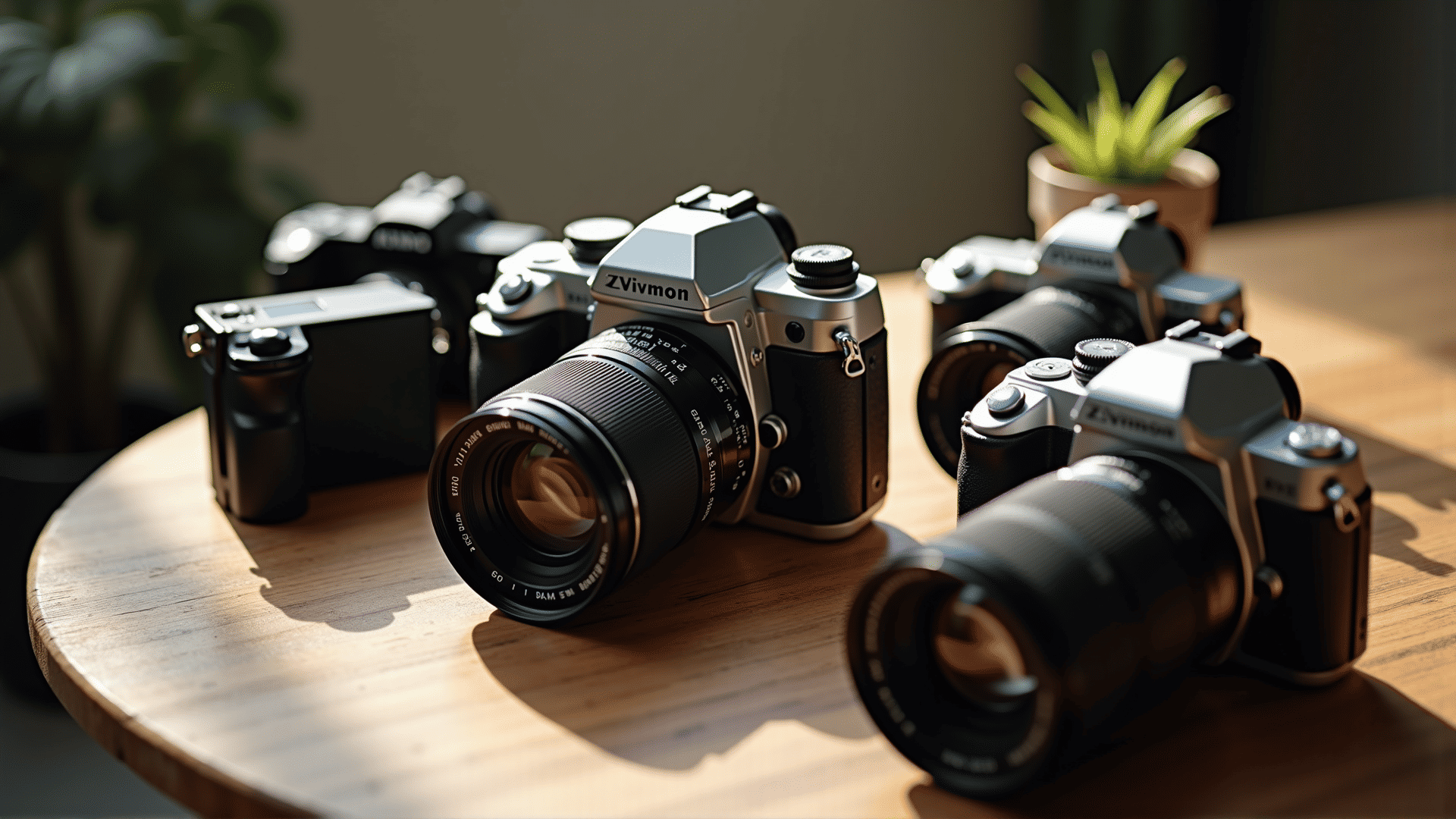
Photography is a rewarding and creative outlet that allows you to capture moments and express your perspective. For those just starting out, diving into this art form can be overwhelming due to the vast array of equipment and settings available. Here’s a simplified guide to help you get acquainted with the basics of cameras and enhance your photography skills.
Understanding Camera Types
Photography begins with choosing the right equipment. Cameras can be broadly categorized into a few types:
-
Compact Cameras: Also known as point-and-shoot cameras, these are straightforward to use. They come with fixed lenses and automatic settings, making them ideal for beginners who want to focus on composition without worrying about technical details.
-
Mirrorless Cameras: These cameras are versatile and lightweight, with interchangeable lenses. They provide high-quality images and come with advanced features. They are perfect for those who wish to learn and grow in their photography journey.
-
Digital Single-Lens Reflex (DSLR) Cameras: Known for their excellent image quality and flexibility, DSLRs have a mirror mechanism that reflects light into an optical viewfinder. They are ideal for enthusiasts who want to have greater control over their photos.
-
Smartphone Cameras: Modern smartphones are equipped with powerful cameras that allow you to capture stunning images. They are handy and can be a great starting point for practicing photography skills.
Exploring Fundamental Settings
Learning about your camera's settings can greatly enhance your photography. Here is a look at some essential settings:
-
Aperture: This setting controls the amount of light that enters the camera through the lens. It affects depth of field—the area of the image that appears sharp. A smaller f-number (like f/2.8) means a larger aperture, allowing more light and resulting in a blurred background, perfect for portraits.
-
Shutter Speed: This determines how long the camera’s shutter remains open to let light in. Fast shutter speeds (like 1/1000) freeze motion, while slower speeds (like 1/30) can create motion blur, suitable for capturing movement.
-
ISO: This measures the sensitivity of the camera’s sensor to light. A lower ISO (like 100) is used in bright conditions, while a higher ISO (like 3200) is useful in low light. Be mindful of using too high an ISO as it can introduce noise to your image.
Composition Techniques
Beyond technical settings, composition plays an important role in photography. Understanding and applying composition techniques can transform your photos:
-
Rule of Thirds: Imagine your image area divided into a 3x3 grid. Position the main subject along these lines or at their intersections to create a balanced and engaging photo.
-
Leading Lines: Use natural lines within the scene, such as roads or rivers, to guide the viewer's eye toward the focal point of your image.
-
Framing: Incorporating elements like windows or arches in the foreground can frame your subject and draw attention to it.
-
Symmetry and Patterns: Look for symmetry and patterns to create compelling and aesthetically pleasing images.
Practice and Experimentation
Photography is as much about practice as it is about learning. Spend time experimenting with your camera’s settings in different environments. Try capturing landscapes, portraits, and still life to understand how lighting and composition affect the outcome.
Conclusion
Getting familiar with camera basics is the first step toward becoming a skilled photographer. By understanding different camera types and essential settings, and applying composition techniques, you can enhance your picture-taking abilities. As you continue to practice, you’ll develop your own style and confidence, capturing moments that truly resonate with your unique vision. Happy shooting!